Wednesday, June 24, 2009

5 Star Hotel in a Plane

0 comments

Take a look the largest plane, airbus a 380 turn into a hotel.. You will be amaze..


Sultan Brunei has a lux Private Jet

0 comments

Sultan Brunei has modified the big airbus A34o into a lux jet with amazing interior take a look on these pictures:


Monday, June 22, 2009

Boeing Bussiness Jet

0 comments


Characteristics:

The BBJ is a special high-performance derivative of the Boeing 737-700 specifically designed for corporate and VIP use.

It combines the size of the 737-700 fuselage (33.6 meters) with strengthened wings and landing gear from the larger 737-800.

The jet platform has a maximum range capability of 7130 statute miles (6200 nautical miles, 11 475 kilometers) while requiring less than 6000 feet (1829 kilometers) of runway. The BBJ provides payload flexibility beyond that of any competitor. Passenger compartment floor can support a uniformly distributed longitudinal load of 37.5 pounds per inch. Floor panels can support 100 pounds per square foot.

Technical data:

Height: 2.16 m
Width: 3.53 m
Floor area: 75 m2
Volume: 149 m3
Flying range: 11475 km
Year of manufacture: A6-RJZ 2000 , A6-RJY 2001

Space, comfort , utility and safety:

Nearly three times the size of even the largest new long range corporate jets, the BBJ provides freedom and the ability to configure the interior so that it exactly matches the personal work and travel preferences of the customer.

The BBJ gives the kind of utility required in todays global business environment: a full scale self contained home and business environment: meeting room, dining room, bedroom etc.

As a member of the popular 737 Boeing family, the BBJ benefits from a history of safety, reliability, customer service and global field support. The BBJ complies fully with the rules of the FAA (Federal Aviation Regulation) and the JAA (European Joint Aviation Authority) to ensure safety in the cabin.

Technical data:

Seat Configuration: 22 VIP / 8 Business Class , 12 economy class seats (optional).

Number & size of doors: One forward entry door (34 inches wide, 72 inches high), one aft entry door, two service doors, two emergency doors over the wing.

Size of windows: 10 inches wide/ 14 inches high.

BUYING A PRIVATE PLANE

0 comments


How it works

So, you’ve had it up to here with long airport security lines, crabby airline employees and generally crowded airports the world over. You’re an extremely frequent flyer and probably spend more time talking to flight attendants than to your own children. You’re a worldly business man and that means a great deal of travel on your part -- but it doesn’t mean you have to dread the experience each time. And, more often than not, it’s not just about wanting a comfortable lumbar-support seat, it’s also about the benefits of having your own airborne conference room and office -- something regular airlines are lacking altogether.

Finding and purchasing a private plane isn’t as hard as it might sound. With the internet at our fingertips at all times, the task can be completed within minutes. If bidding wars aren’t your style, keep away from eBay. There are a multitude of sites out there with ample selections and a wealth of accompanying information -- as well as full contact details for each seller -- in order for you to make the correct purchase.

Buying a private plane will rack up the dollars a little faster than buying a new suit -- especially if you’re planning on buying new. Cessna’s six to eight seaters can be found for $1.6 million to $3.8 million. If a larger 32-seat jetliner is your ideal private jet, the range increases to the 10 millions. Of course, you don’t always have to buy new; there are plenty of used models available and online companies willing to help you in your search for the perfect aircraft and you will be able fly anywhre and just operate your Blackberry.

Discover the benefits of dropping your cash on a private jet… Next Page >>

Private Jets

0 comments


Are Private Jets Safer Than Commercial Airliners?

1 comments


The Big Three auto companies say they are.


At a hearing of the House financial services committee last week, lawmakers scolded the CEOs of the Big Three auto companies for
flying private jets to Washington, D.C., before requesting a bailout. A Chrysler spokeswoman responded that "business travel requires the highest standard of safety for all employees," andCNN noted that the Big Three "have policies requiring their CEOs to travel in private jets for safety reasons." Despite these concerns, General Motors announcedyesterday that CEO Richard Wagoner will not use a private aircraft when he returns to the capital for another round of meetings next week. (Ford and Chrysler have yet to announce their plans.) Are private jets really safer than commercial airliners?

Private Jet.No. From Jan. 1, 2008, to Oct. 24, 2008, there were only 16 major accidents on commercial planes—including flights carrying passengers and those carrying cargo. Seven of these accidents resulted in zero fatalities while the biggest crash of the year killed 154 people (Spanair Flight JK5022 on a Boeing MD-82). During the same time period, there were 10 major accidents on business jets. There were no fatalities on three of these flights and eight (the largest number) on East Coast Jets Flight 81, which crashed at Owatonna Airport in Minnesota.

Expressed in terms of flight hours, the accident rate is nearly identical. According to the National Transportation Safety Board, there were .135 accidents per 100,000 flight hours on commercial air carriers in 2007. The NTSB breaks up business flights into two categories—"corporate" (the aircraft must be flown by a two-person, professional crew) and "business" (two-person, professional crew not required). In 2007, the corporate accident rate was .103 per 100,000 hours, and the business rate was .72 per 100,000 hours.

History of a Jet Airplane

0 comments


A jet aircraft is an aircraft propelled by jet engines. Jet aircraft generally fly much faster than propeller-powered aircraft and at higher altitudes — as high as 10,000 to 15,000 meters (about 33,000 to 49,000 ft). At these altitudes, jet engines achieve maximum efficiency over long distances. The engines in propeller powered aircraft achieve their maximum efficiency at much lower altitudes. Jet aircraft can move faster than sound.

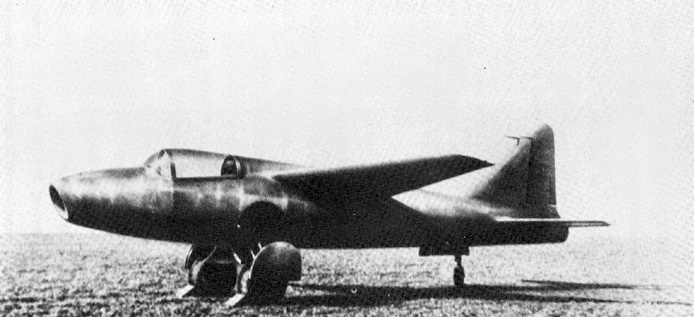
Henri Coandă, a Romanian Engineer, was the first to build a jet plane in 1910 — the Coanda-1910. Later on, two engineers, Frank Whittle in the United Kingdom and Hans von Ohain in Germany, developed the concept independently during the late 1930s, although credit for the first turbojet is given to Whittle.[citation needed] The concept had already been discussed as early as August 1928 by Frank Whittle at Flying School, Wittering, but Hans von Ohain also wrote in February 1936 to Ernst Heinkel, telling him of the design and its possibilities. However, it can be argued that A. A. Griffith, who published a paper in July 1926 on compressors and turbines, which he had been studying at the RAE, also deserves priority credit, perhaps more than either Frank Whittle or Hans von Ohain.

The first turbine-equipped jetplane was designed on paper in late 1929 when Frank Whittle of the British Royal Air Force sent his concept to the Air Ministry to see if it would be of any interest to them. The first manufactured turbine jetplane was the Heinkel He 178 turbojet prototype of the German Air Force (Luftwaffe), piloted by Erich Warsitz on August 27, 1939.
The first flight of the Italian Caproni Campini N.1 motorjet prototype was on August 27, 1940. Test pilot Major Mario De Bernardi of the Regia Aeronautica was at the controls.
The British flew their Gloster E.28/39 prototype on May 15, 1941, powered by Sir Frank Whittle's turbojet, and piloted by Flt Lt PG Sayer. When the United States learned of the British work, it produced the Bell XP-59 with a version of the Whittle engine built by General Electric, which flew on September 12, 1942, piloted by Col L. Craigie.
The first operational jet fighter was the Messerschmitt Me 262, made by Germany during late World War II. It was the fastest conventional aircraft of World War II — although the rocket-powered Messerschmitt Me 163 Komet was faster. Mass production started in 1944, too late for a decisive effect on the outcome of the war. About the same time, the United Kingdom's Gloster Meteor was limited to defense of the UK against the V1 flying bomb and ground-attack operations over Europe in the last months of the war. The Imperial Japanese Navy also developed jet aircraft in 1945, including the Nakajima J9Y Kikka, a crude copy of the Me-262
On November 8, 1950, during the Korean War, United States Air Force Lt. Russell J. Brown, flying in an F-80, intercepted two North Korean MiG-15s near the Yalu River and shot them down in the first jet-to-jet dogfight in history.
BOAC operated the first commercial jet service, from London to Johannesburg, in 1952 with the de Havilland Comet jetliner.
The fastest military jet plane was the SR-71 Blackbird at Mach 3.2. The fastest commercial jet plane was the Tupolev Tu-144 at Mach 2.35.